


Home / / Photo / Sculptures / Curatorial Projects / Bio / Contact
|
Audition Starring CFOXC |
The Coop Kenya Demo Derby |
Corviale Three things The Romanians |
The Mystery of God Exposed |
bitches brew under over sideways... fear chamber |
||
|
||||||
>stills and quotes
>installation views
>68 archive photos
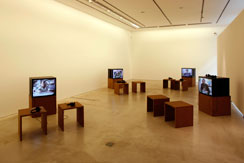
installation view Galerie im Taxispalais
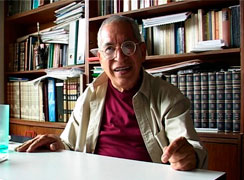
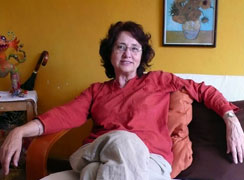
Mexico 68 / interviews with participants of the student movement (2007)
Between the summer of 2005 and spring of 2007 I conducted 19 interviews about the significance and impact of the movement on Mexican society, politics and culture in general, and the participants’ biographies in particular. These are personal accounts and memories, political and social analysis and reflections of the events of this mythic year; documents of the visions and dreams of a generation who thrived to change Mexican society and the authoritarian political system.
The 68 student movement in Mexico began after attacks of repressive police forces against students in Mexico City (July 1968). Students from the National University of Mexico (UNAM), the Politecnico (Poli) and various high schools formed the National Strike Council and released a six point petition which demanded civil liberties and the end of government repression. The strike was soon supported by universities throughout the country, teachers, intellectuals and artists. During August and September the movement organized mass demonstrations with up to 600.000 participants and received growing support from student families, a substantial part of the Mexican middle class as well as some worker unions. After the army occupied the campuses of the National University and Politecnico the conflict escalated in the infamous massacre of Tlatelolco on October 2 1968, ten days before the Olympic Games were inaugurated in the University stadium in Mexico City. The strike officially ended in December of 1968 but the last political prisoners of the movement were released from prison only in 1971.
The interviews will be published in Heidrun Holzfeind "CU / 68" by A&R Press, Mexico City by the end of 2008.
Interviewed persons:
Raul Alvarez (Comité de 68)
Selma Beraud (actress)
Maria Fernanda Campa Uranga (geologist)
Adriana Corona (anthropologist)
Deborah Dultzin Kessler (astronomer, UNAM)
Rodolfo Echeverria (National Commission for Indian Affairs)
Silvia Gonzales Marin (historian, director of the Institute for Bibliographic Investigations, UNAM)
Hira de Gortari (historian, Institute for Social Investigation, UNAM)
Renata von Hanffstengel (professor for German literature, UNAM)
Teresa Losada (sociologist, Institute of Political Science, UNAM)
Ana Ignacia Rodriguez, Nacha (Comité de 68)
Carolia Paniagua (psychologist, painter)
Mercedes Perelló (psychologist)
Marcelino Perelló Valls (mathematics professor, UNAM)
Elena Poniatowska (writer)
Patricia de los Rios (professor of Social Sciences and Politics, Iberoamerican University)
Carlos Sevilla (political science professor, UNAM)
Carmen Soler (biochemist / researcher, UNAM)
Raul Moreno Wonchee (professor for macrobiology, UNAM)